{{ pn.kind }} {{ pn.num }}
{{ pn.time }}
{{ pn.title }}
{{ pn.desc }}
Chair
{{ pn.chair.name }}
{{ pn.memberLabel }}

Let this summit be the catalyst that ensures our good deeds outlive us.

Three years ago, National Waqf began sowing the seeds of a vision to address our communities funding needs through the revival of waqf. In this time, we have come to understand two things clearly. The first is the scale of what is untapped. The waqf model sits inside a permanent endowment space in the UK that our community has barely begun to enter. The second is the risk sitting alongside it. Too many of our institutions – mosques, charities, schools – are not built to survive beyond the people who founded them.
More and more philanthropists and those operating within the charity space recognise this. However, how do we work towards transforming the status quo when waqf asks for delayed gratification in a sector built around urgent, competing priorities? Every pound held back for the long term is a pound not spent on this month’s need. The government too has reached a similar conclusion. Its place-based philanthropy report, published in April, argues that UK giving must move from reactive, one-off donations towards long-term structured capital. This is not a new conclusion. Waqf has been a core part of Muslim philanthropy since the beginnings of Islam.
British Muslims give an estimated £2.2 billion a year, according to Equi’s 2025 report. The generosity has always existed in our communities. What we have not yet built is the structure to make that giving self-sustaining.
That is the reason for today. The 200 people in this room represent Muslim charities, scholars, existing waqf organisations, Islamic finance providers, and the advisers who work alongside them. Each of you holds a piece of the infrastructure this sector needs. It takes all of you working together to build the whole of it.
We are also using today to launch the Waqf Pack, the first legally robust, Shariah-compliant framework for establishing a waqf under England and Wales charity law. It exists so that any charity here can move from theory to structure within months, not years.
Before you leave, consider what portion of your income could sit permanently rather than being spent the moment it arrives. Let’s talk to each other to identify what that will take.
Let this summit be the catalyst that ensures our good deeds outlive us.
Thank you, and Jazakallah khair for being a part of The Waqf Summit 2026.
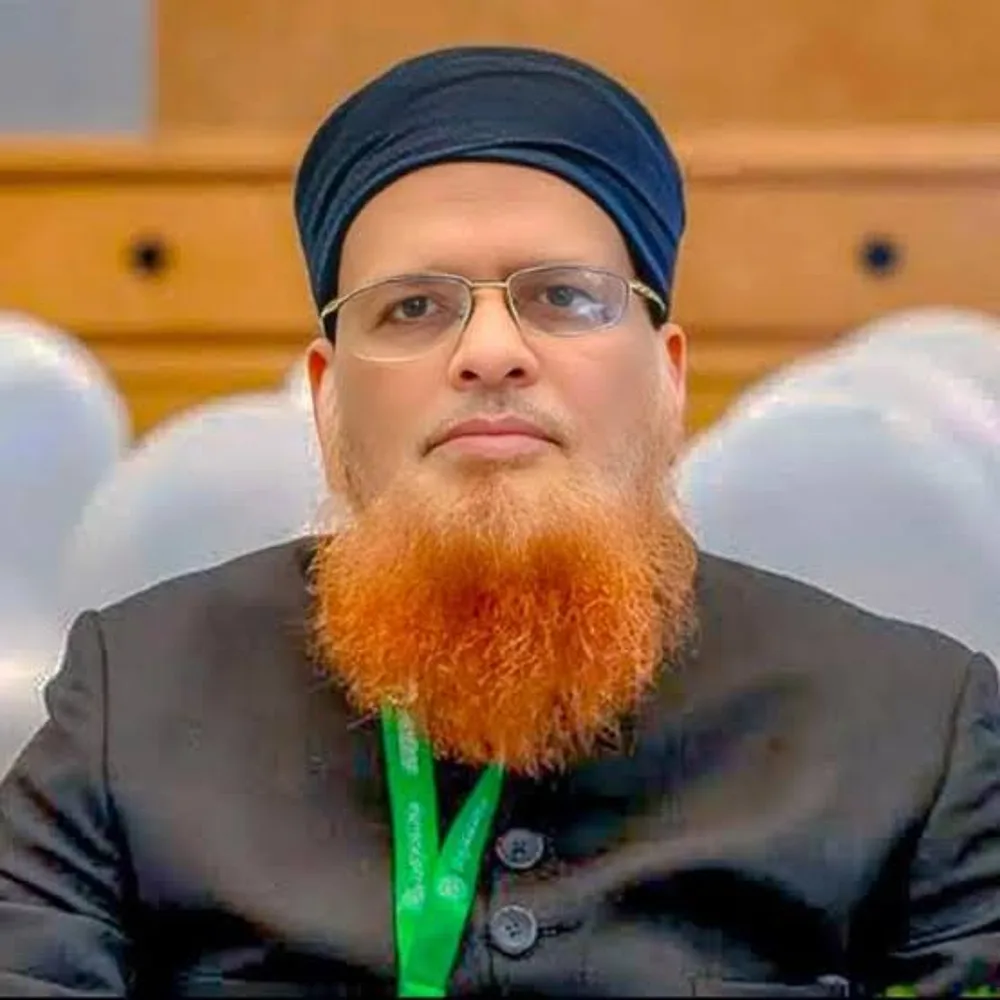
One of the world’s foremost scholars of Islamic jurisprudence and a pioneering authority in Islamic finance.
Over several decades, he has played a major role in shaping the modern Islamic finance industry, helping to translate the principles of classical Islamic commercial law into practical frameworks for contemporary banking, investment, sukuk, takaful and financial markets.
He serves as Chairman of the Shariah Board of the Accounting and Auditing Organization for Islamic Financial Institutions (AAOIFI) and has advised numerous Islamic financial institutions and initiatives across the world. His scholarship and guidance have contributed significantly to the development of international Shariah standards governing Islamic financial transactions.
Alongside his work in commercial finance, Mufti Taqi Usmani has consistently emphasised that an Islamic economic system extends beyond the prohibition of interest. It encompasses ethical investment, responsible ownership, wealth circulation, charitable giving and institutions such as zakat and waqf, which have historically played a central role in supporting education, welfare and wider society.
His extensive writings, teaching and institutional work have made him one of the most influential contemporary voices in Islamic economics and finance.
His presence at The Waqf Summit brings together the classical tradition of Islamic jurisprudence with decades of experience in developing modern Islamic financial institutions and provides an important perspective on how waqf can once again become a powerful and sustainable institution for the Muslim community.
Four conversations across the day, from the intention behind waqf to how it is governed and invested.
Scholars, charity leaders, funders and advisers sharing the stage today.
Four strategic priorities guide everything we do.
Leading the UK’s waqf infrastructure. The Waqf Pack is the first legally robust, Shariah-compliant framework for establishing a waqf under England and Wales charity law.
Reviving waqf education through our publications and seminars, shifting the narrative of Muslim giving towards sustainability.
Donations to our Public Waqf are invested for good. The returns are given as grants to verified UK causes and charities, and we take the case for waqf to communities across the country.
60% of our overheads are currently covered by income-generating assets preserved in our Private Waqf, kept entirely separate from the Public Waqf. We are working towards full self-sufficiency, so we never need to fundraise for our running costs.
Helping masjids and charities establish lasting charitable endowments
A practical guide to establishing, governing and growing a Waqf under the charity law of England & Wales, grounded in classical Islamic principles.
Legal templates drafted by Trowers & Hamlins and independently reviewed by Bates Wells.
Waqf gives us a way to dedicate assets for lasting charitable benefit. The capital or asset is preserved, while its income or use supports the intended purpose. Over time, that can help an organisation build a more dependable foundation for its work.
A Waqf is intended to be permanent and irrevocable. Its foundations need to be strong enough to support that commitment. The trustees who establish it may eventually move on, but the assets, the charitable purpose and the responsibility to manage them will remain.
We spent eighteen months putting it together. We committed considerable time, effort and money, spoke to scholars, legal experts, governance specialists and investment professionals, and worked through the practical questions charities would face.
“As more charities and masjids consider Waqf, we want to help them do it properly.”
For charities and community organisations seeking to establish endowment-based models, and the trustees and decision-makers who want clarity, confidence and credibility.
Raise and pool donations into an investment endowment. Apply the income to further charitable purposes or sustainably fund the charity.
For private donors who want to create a named Waqf with a charity of their choice.
A donor transfers title to property. The charity holds it as permanent endowment for direct charitable use or to generate income for named charitable purposes.
Start with the Quick Start to choose your pathway, then work through the core framework and operations sections: Introduction to Waqf, Governance, Legal & Regulatory, Grant-Giving, Finance, Investments, Scenario Checklists, and Board Aids & Logs.
A settlement deed, a declaration of trust and a deed of gift. Drafted by Trowers & Hamlins and reviewed by Bates Wells, to be adapted to the charity’s circumstances.
A reference workbook to help trustees explore the investment landscape and ask informed questions of their advisers. It is not a recommendation to invest in any particular product.
Helps trustees assess proposals, risks and conflicts, obtain appropriate advice and record their reasons for proceeding. Primarily geared towards property investments.
The consultation and support are an essential part of the package.
We speak with the organisation to understand what it wants to achieve, what arrangements it already has and whether it is ready to establish a Waqf.
Mawlana Tahir Talati and National Waqf’s governance and investment experts take the charity through the entire pack, discuss how it applies to its circumstances and identify the decisions its trustees need to make.
We help draft the trust deed according to the organisation’s requirements.
The package includes review of the agreed Declaration of Trust, subject to the law firm’s scope and eligibility requirements.
Pricing is discussed during the initial consultation and reflects the organisation’s requirements and the support it needs. Access is subject to National Waqf’s assessment of suitability.
This Pack is an educational guide. It is not legal, financial, tax, or investment advice. Every organisation and donor must obtain independent legal and financial advice before relying on, adapting, or signing any template, policy, or deed.
{{ para }}